Brand and digital marketing
Business Strategy
Customer Strategy
Data analytics and insights
Leadership
Transaction Advisory
The Operating System of Liquidity: Why Operational Certainty is the New Exit Strategy
By Remi Pesseguier, CEO of Singulier
February 18 2026


Leaving the stage at the recent IPEM Cannes Value Creation Summit, one sentiment dominated the corridors: the private equity industry has entered a cycle where the pressure to distribute capital outweighs the ambition for peak valuation.
Financial sponsors are under immense pressure to return capital ahead of fundraising, noting that, for many, returning cash has become more critical than holding out for the last turn of valuation.
This shift fundamentally changes the definition of “value creation.” According to IPEM Wealth’s 2026 Private Equity Barometer Report, 97% of GPs still cite the exit environment as their principal risk. Liquidity is no longer a waiting game. It is an operational discipline. Today, liquidity is earned by building an operating system that produces proof: measurable performance, defensible earnings, and a diligence narrative so clean it accelerates the buyer’s conviction.
The Challenge: “The Tiring 20s” and the Flight to Quality
Many GPs expect an improved business environment in 2026. However, despite the optimism, the market is reopening selectively. We are in a sorting mechanism where “ready” assets clear, and the rest stall.
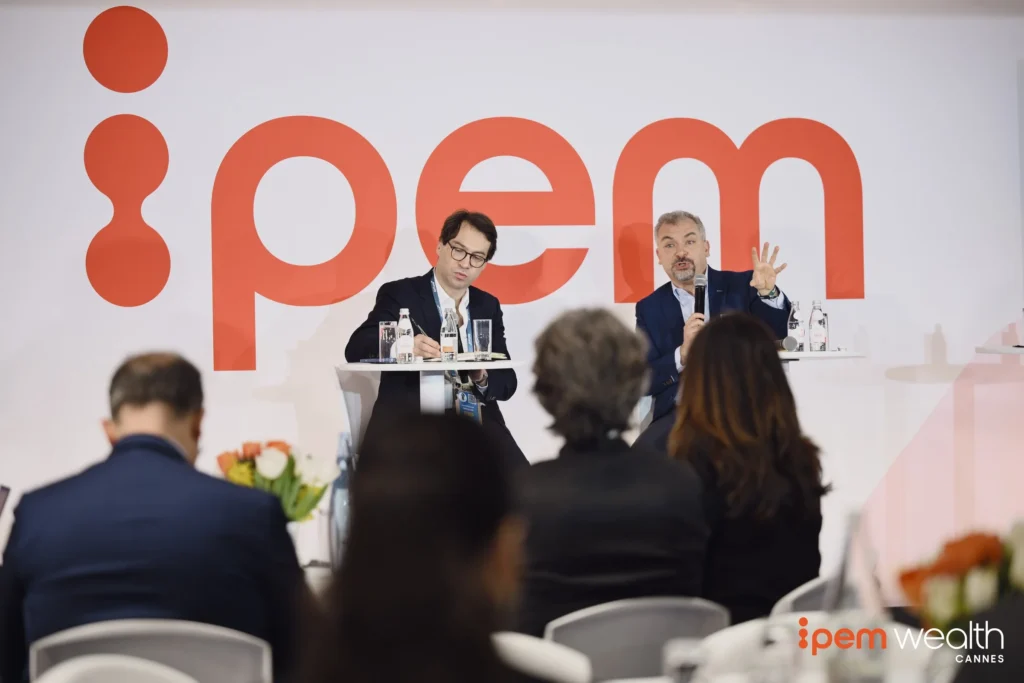
I had the pleasure of moderating the keynote session with Riccardo Basile, Head of Value Creation at Permira, who offered a defining diagnosis for this friction: we are navigating “The Tiring 20s”. Management teams are exhausted from years of fighting COVID, inflation, supply chain disruptions, and geopolitical instability. They cannot just run faster; they need better machinery to drive performance without burning out.
This fatigue creates a bifurcation in asset value. Basile shared a stark example of two similar assets that commanded materially different purchase multiples based solely on data maturity. One had the infrastructure to implement AI immediately; the other needed 18 months of foundation building. In 2026, that 18-month lag is not just an operational headache. It is a valuation discount that stalls liquidity.
The New Physics of Returns: Growth is the Only Multiple Left
The The data confirms that the traditional levers of value creation have shifted. According to the Gain.pro 2025 Report, revenue growth now accounts for 54% of value creation in PE deals, while the contribution from multiple expansion has dropped to 32%.
You can no longer rely on the market to lift your boat. To command a premium, funds must demonstrate a real, repeatable, and verifiable organic growth engine.
1. Data Strategy as the Spine of Proof
Most value creation plans fail at measurement. If KPIs are debated monthly, the operating system cannot steer on a weekly basis. In this new cycle, data transformation is not about building a lake; it is about building a spine of auditable proof. Buyers are looking for decision integrity: whether the data backbone can support weekly execution decisions and withstand the scrutiny of modern diligence. Data strategy is key to steering a business, and as such, good-quality, comprehensive data backed by intelligent and well-planned automation should be a mandatory foundational initiative.
2. AI-Driven Process Optimisation to Defend EBITDA
The first job of value creation in 2026 is earnings defence. The Gain.pro data highlights that margin expansion is most impactful in operationally challenged businesses—78% of deals with negative entry margins achieve margin expansion through operational fixes. With GPs now citing AI integration as a top internal priority, the industry is moving from “pilot theatre” to production. Successful value-creation teams are shifting from firefighting to strategic integration, deploying AI in high-volume workflows such as finance and customer operations to lock gains into standard work.
3. Go-to-Market Transformation: Turning Efficiency into Durable Growth
Cost savings buy time; revenue quality buys a premium. Fast-growing companies typically command 30-50% higher multiples at exit. GTM transformation is the bridge between operational efficiency and exit optionality. It requires funnel definitions that match reality and discount governance that protects margins, ensuring the commercial narrative is backed by hard data.
The “Day 90” Reality Check
If liquidity is earned, the question for 2026 is simple: What is demonstrably true by Day 90?
A plan needs real measurement principles. Assets need a weekly KPI cadence that reconciles to finance, automation wins live in production, and a clean commercial baseline where pipeline conversion and pricing leakage are visible.
New investors and traditional LPs are scrutinising track records more than ever. Private equity in 2026 will not be defined by who has the best investment thesis, but by who can build the most credible operating system across their portfolio.
Funds cannot control multiples, but they can control operational certainty. And in 2026, operational certainty is what exits.
Sources
- Gainpro, Private Equity Value Creation Report 2025
- IPEM, Private Equity Barometer 2026
Let’s Talk

About Rémi Pesseguier
CEO and Founder, FR
Rémi is the Founder & CEO of Singulier, advising private equity funds and their portfolio companies across the full investment lifecycle—from digital due diligence to post-acquisition value creation. His expertise spans digital and data-driven marketing and AI-driven digital transformation, driving measurable impact on growth and EBITDA.