
AI Strategy and Transformation
Business Strategy
Data analytics and insights
Leadership
Transaction Advisory
The Right Model for Digital and AI Capabilities: Five Lessons from the PEI Operating Partners Forum
By Andrew Dawson, Managing partner at Singulier
June 5 2026


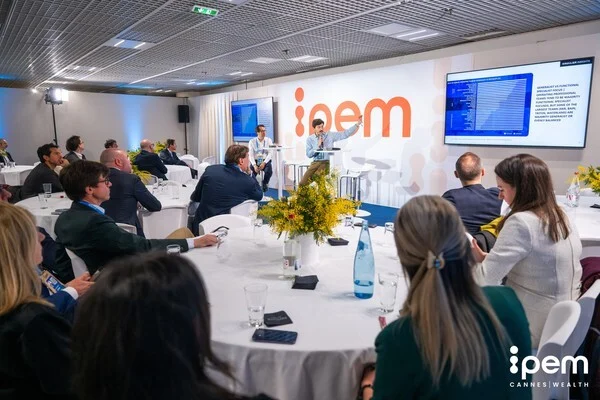
At this year’s PEI Operating Partners Forum, I was fortunate to be asked to moderate a panel on the right model for digital and AI capabilities. This well attended session focused on the practicalities many portfolio companies are now facing in this area.
Singulier also co-hosted the London Value Creation Evening alongside Vertice, bringing together a curated group of senior private equity leaders for more candid discussion on what is really driving value creation in private equity today.
What stood out to me most across these conversations was tha AI is simply not just another chapter in the same digital transformation playbook. Too many leaders still approach it as another technology transformation programme to delegate, phase in and measure later. That instinct is understandable, but in reality, it is off the mark.
What emerged from the discussion was not, fundamentally, a technology conversation. It was a business strategy conversation. And that distinction matters.
AI forces first principles, not just process optimisation
Most technology waves of the past three decades have been about doing the same things faster, cheaper or with greater visibility. AI breaks that pattern.
It does not simply ask how to improve an existing workflow. It asks a far more difficult question: why does this workflow exist at all?
That is the real shift. The companies that will create disproportionate value from AI will not be the ones that automate legacy ways of working at the margin. They will be the ones willing to challenge operating assumptions that survived only because changing them once felt too slow, too expensive or too risky.
In practice, this means AI is not just a productivity layer. It is an opportunity to redesign decisions, roles, handoffs and even where human judgement genuinely adds value. The cognitive centre of gravity starts to move from person to machine. Once that happens, the operating model has to change with it.
The value creation curve is far steeper than in traditional transformation programmes
One of the clearest themes from the discussion was speed.
AI is creating a business impact on a different curve from prior digital or technology programmes. This is not a story of steady incremental gains over three years. It is a story of compressed timelines, asymmetrical upside and very real execution risk.
We are already seeing examples that would have felt implausible not long ago: teams producing a year’s worth of code in a week, service environments collapsing resolution times from months to days, and product or process changes going live at a pace that would once have required an entire annual roadmap.
For portfolio companies, that changes the board-level question. Leadership teams need to move fast enough to capture the upside before competitors reset the baseline.
The window is open. But it is narrowing faster than many boards appreciate.
Technology cannot lead; the business context must
This is where many digital transformations have gone wrong, and AI will be no more forgiving.
Too often, the initiative begins in technology, gets framed around tooling, and ends up stuck in a cycle of pilots. The result is activity without economic consequence.
If AI lives solely in IT, it will usually die in IT.
The right starting point is not the model, the platform or the architecture. It is the business problem, the user journey and the P&L outcome. That is why AI transformation must be owned by business leaders in partnership with technical teams, not delegated downward as a specialist programme.
Functional leaders, operators and technologists need to be in the same room early, aligning on what value looks like before anyone starts building.

L-R: Andrew Dawson , Marine Diot (EQT), Gilad Amir (Pollen Street Capital), and James Craig (GCP)
Ruthless prioritisation is non-negotiable
AI creates possibilities faster than most organisations can absorb them. That is precisely why focus matters.
Capabilities are evolving every few months. New tools appear constantly. Vendor noise is relentless. In that environment, broad ambition is not a strength. It is a liability.
The consensus is that “doing AI” everywhere at once poses a real risk to sustainable transformation. The best approach is to identify the small number of use cases where AI can deliver a structural, measurable impact and then going deep.
That usually means prioritising the places where one of three conditions is true:
- the value pool is material
- the data and workflow are sufficiently mature
- the change can be operationalised quickly
Everything else can wait.
Without that discipline, companies build a graveyard of pilots: technically interesting, commercially marginal and quietly abandoned. Focus is not a constraint on AI strategy. In most cases, it is the strategy.
AI is now a revenue story, not just a cost story
Much of the early AI narrative centred on cost takeout: automation, efficiency, lower support burden, reduced manual effort and leaner back-office operations.
That narrative is not wrong. It is simply incomplete.
What is becoming more interesting now is the revenue angle. AI is starting to reshape sales qualification, customer success, marketing effectiveness and commercial decision-making. In other words, it is moving from an efficiency tool to a revenue architecture tool.
One example discussed on the panel came from a B2B software environment, where ‘AI-supported lead qualification’ assessed inbound signals against ideal customer profiles and routed the highest-potential opportunities directly to sales. The point was not the tool’s novelty. The point was the commercial consequence: better conversion, faster response and a stronger link between data and revenue execution.
That is where many organisations are still underestimating the opportunity. If leaders think about AI only as a cost play, they are still optimising for the last cycle’s prize. The bigger opportunity is to redesign how demand is identified, prioritised and converted.
The implication for private equity leaders
AI needs to be assessed as part of the investment thesis, the value creation plan and the target operating model. Which functions can be structurally redesigned? Where can revenue move faster? Where does execution risk sit? Which capabilities need to be built centrally, and which should live within the portfolio company? Which two or three use cases matter enough to anchor the agenda?
Those are strategic questions, not technical ones.
The firms and portfolio companies that navigate this well will become structurally different businesses with different operating models, talent mixes, and competitive positions.
With all the above, my main takeaway, is that AI is not just a digital transformation programme. It is actually choice… about what kind of business you want to build.
Three years from now, I suspect we won’t distinguish between ‘AI-enabled businesses’ and everyone else.
There will simply be businesses that have successfully embedded AI capabilities into how they operate – and those that have not.
Acknowledgements
My thanks to the panellists featured in the session materials — Gilad G. Amir, James Craig and Marine Diot — for helping shape such a timely discussion on digital and AI capabilities in private equity-backed businesses.
Also many thanks to Brix Sumagaysay and Lawrence Dvorchik and PEI for inviting me to speak.
Let’s Talk

About Andrew Dawson
Partner, UK
Andrew Dawson is a managing partner at Singulier. With over 25 years of global operating experience, he has been at the forefront of driving growth, transformation, and M&A. Having held various senior executive roles, including recently as Group COO in a large global software company, he brings a wealth of expertise in steering complex change, integrating acquisitions, and launching new business units.