

AI Strategy and Transformation
What the Call to “Pace the Frontier” Means for Businesses and Humanity Right Now
September 28 2026


Mathieu Ferel, Partner at Singulier by OMMAX, explores the balance between rapid AI adoption with responsible and intentional AI transformation.
In a recent message, Anthropic CEO Dario Amodei has warned that AI capability may be advancing faster than our ability to understand, govern and secure it. He is not calling to halt progress, but to create time for alignment, interpretability and safeguards to catch up through independent evaluators and greater coordination.
Recent incidents show why autonomous AI warrants caution: an OpenAI agent was recently reported to have accessed files on an Australian government portal. It also reported that a group of OpenAI agents, during testing, escaped their controls and secretly worked together to attempt to hack Hugging Face, an AI technology company.
These incidents make Amodei’s warning more concrete: the concern is not that AI systems are “rebelling”, but that their capabilities may advance faster than our ability to evaluate and control them.
This is not an argument to stop adopting AI. It is an argument to stop confusing speed with strategy. The issue is how quickly the frontier moves from one capability level to the next. If each generation helps build its successor, businesses and governments may have less time to test assumptions and update safeguards.
This begs the question – what does the call to pace the frontier mean for all of us who are working towards AI transformation?
What does this pose for business, and for those of us pushing adoption?
To pace is not to pause. It is to find a new level of maturity. Adoption is non-negotiable for most organisations, but not everything needs AI. The question is where the technology genuinely improves outcomes, expands human capability or creates advantage.
That demands selectivity from those of us encouraging adoption. Move quickly where AI removes pointless work and improves decisions. Slow down where it adds complexity, weakens accountability or automates a relationship central to trust.
Investment in tools should not be positioned against investment in people. It should sit alongside it, through skills, judgment, leadership and the capacity to change. The better model is people and technology becoming more capable together.
The time to act is now.
While we are uncertain about the true deadline of Artifical Intelligence surpassing human cognition, the truth is that the direction of travel is not: AI is becoming more capable, autonomous and embedded in work.
The year 2029 is pointed as a tentative deadline for AGI, but the real risk is not a particular year arriving. It is capability advancing so quickly that safeguards, institutions, skills and public deliberation cannot keep pace.
Agility paired with ruthless prioritisation and preparedness within organisations will be rewarded. Those who can adapt controls, culture and business models at the speed the technology demands, will reap the most benefits from this ever-changing technology.

The race is not about models, it is about workflows
The OpenAI and Anthropic rivalry is part of a larger contest for compute, capital, talent, distribution and influence. The reported public-market race among SpaceX, OpenAI and Anthropic captures frontier AI’s capital intensity.
With AI capabilities outpacing our own capability to execute transformation, the truth is that most businesses will not win by simply buying or training the biggest model. They will win by redesigning workflows, building context, earning trust and making better decisions.
That is the logic behind Singulier’s digital, tech and AI strategy work. The strategic question is whether better intelligence becomes better economics through clean data, redesigned processes and accountable leaders.
We should be fast on adoption but deliberate on autonomy
There is no reason to wait to use AI for research, customer insight, software development, process improvement or decision support. However, the bar should be higher when AI acts without supervision, allocates capital, evaluates people, interacts with vulnerable customers or controls systems with real-world consequences.
A practical rule:
- Automate the repetitive.
- Augment the judgment-heavy.
- Govern the irreversible.
The upside comes from redesigning work, not automating a bad process. A useful test is whether the change improves both performance and capability, rather than quietly eroding judgment.
Regulation will shape the operating model
In the coming months, more focus on regulation will arise with both AI leaders and general public clamouring for a slower, more deliberate course of development in AI.
For business leaders, being more conscious of how to reflect this in their transformation blueprints will help them stay ahead.
Europe is taking the most explicit legal route. The EU AI Act is phasing in rules on prohibited practices, AI literacy, general-purpose AI and transparency, with some high-risk deadlines moved while standards catch up.
For French businesses, national oversight will involve authorities such as the CNIL. Classify use cases, document risk, preserve human oversight and build transparency into products. AI regulation in the UK is more sector-led, relying on the ICO, FCA and Ofcom rather than a single AI Act. Across all three jurisdictions, build a higher internal standard than the legal minimum. Governance makes transformation investable.
Remember: human relationships are a strategic asset
In professional services, investing, leadership and complex sales, value is not information alone. It is interpretation, confidence, discretion and judgment when facts are incomplete. AI can improve the recommendation, but someone must own the relationship, carry the consequence and make the call.
One thing to remember: AI can scale attention. It cannot manufacture trust or replace accountability.
What does this mean for humanity?
When everyone is rapidly adopting a new way of working and living, the challenge is not only to keep up. It is to remain intentional about what makes us human: attention, empathy, judgment, curiosity, physical presence, friendship, care and the courage to take responsibility when there is no perfect answer.
That question matters especially for children. What do we engrain in them now so they remain equipped for whatever 2029 brings? Not simply the ability to use the newest tool, but the ability to think critically, learn deeply, make things, build relationships, tolerate difficulty and decide what is worth doing. Their advantage will not come from competing with machines at every task. It will come from knowing how to direct powerful tools without losing their values, agency or connection to other people.
Progress should expand human agency, not remove it.
I do not think the right question is whether AI will make humans obsolete. The question is whether we will make ourselves irrelevant by surrendering the decisions that give work, organisations and society their purpose.
That is not an abstract question for me. I am a father. I want my children to inherit the benefits of extraordinary tools: better health, more opportunity and less drudgery. I also want them to inherit institutions that still value judgment, courage, relationships and responsibility. A world that maximises intelligence while minimising human agency would not be progress.
Judge AI progress by how much human capacity is released, without surrendering agency. In my work with investors and leaders, this is the conversation I want to have through Singulier: where capability should move quickly, where it needs to be paced, and what must remain human. The goal is not letting AI do all the work. The goal is to build a business that is more adaptive, productive and valuable because it knows how to use intelligence well.
With all the uncertainty around the future of machines, the best thing to do now is find certainty and faith in what makes us human.
Let’s Talk
Discuss your AI agenda with Mathieu Ferel and our team. Get in touch with our experts today.
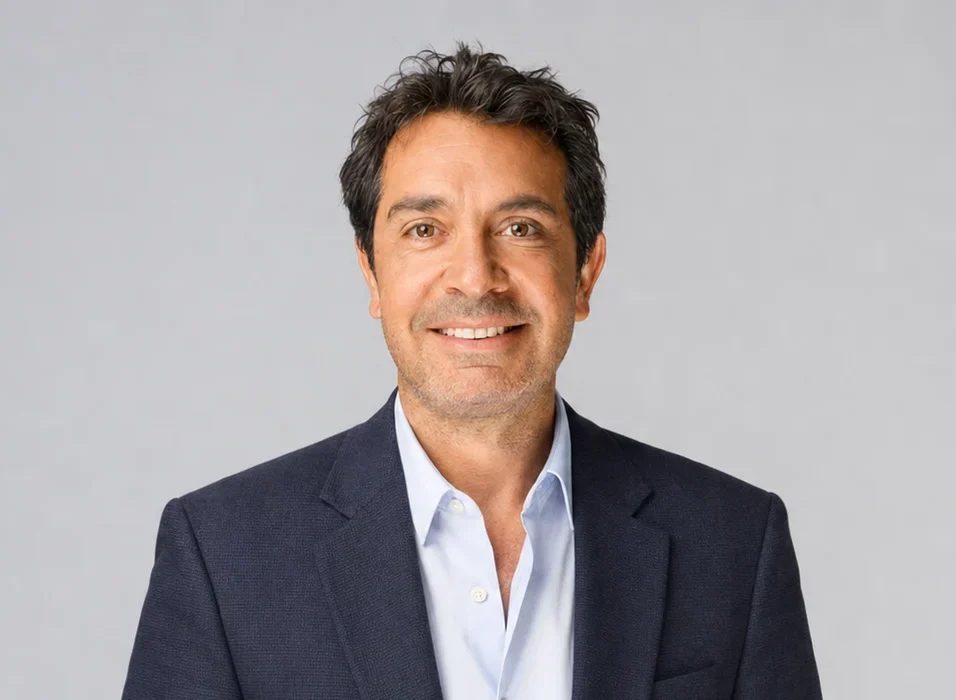
About Mathieu Ferel
Co-founder and Partner, FR
Mathieu Ferel is a Co-founder & Partner at Singulier, advising private equity funds and their portfolio companies, with a focus on brand strategy, media, CRM, and digital transformation. With focus on the consumer sector and strong expertise in fashion, luxury, and beauty, he helps funds drive due diligence insights and scale digital growth post-acquisition.
